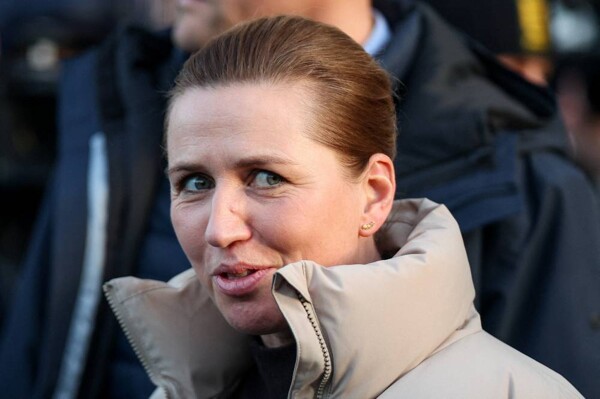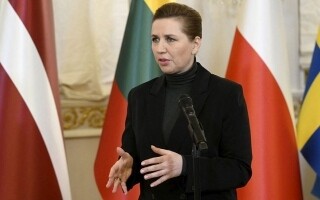
Among all the measures taken in Denmark over the past decade to deter people from seeking asylum, the 'instability of refugee status' is often cited as 'the most effective'. Before 2015, refugees in Denmark were allowed to stay for a period ranging from five to seven years, after which their residence permits became permanent automatically. However, 10 years ago, when more than a million people arrived in Europe fleeing political events in their countries—mostly from Syria, Afghanistan, Iraq, and Eritrea—the Danish government radically changed the rules. Since then, temporary residence permits are only granted for one to two years at a time, and there is no longer any guarantee of obtaining a permanent visa. To gain permanent status, refugees must master the Danish language, and they are required to have worked full-time for several years. Michala Bendixen, who coordinates efforts at the European Commission's Migration Center and heads a refugee advisory group called 'Welcome to Refugees in Denmark', said: 'It's about the situation, the feeling that you are here as a temporary guest, you don't know where your future will be'. She adds: 'Even a speeding violation on the road can postpone permanent residency for several years in the future'. Migration Policies Denmark's migration policies have seen renewed attention after it became clear that the British Labour government is seeking to emulate its approach in an attempt to make the UK a less attractive destination for asylum seekers. Despite criticism from the UN and human rights organizations, it appears these restrictions, among the strictest in Europe, have achieved the result politicians hoped for. In 2014, a total of 14,792 asylum seekers arrived in Denmark, with the largest number coming from Syria and Eritrea. By 2021, that number had dropped to 2,099, but it rose in 2024 to 2,333. Of the nearly 100,000 residence permits granted in Denmark last year, only 1% were for refugees, while most were from Ukraine, classified separately, as well as migrants from other parts of the European Economic Area, people under 'family reunification', and others with work and study permits. Denmark's Reputation However, critics say this decline has come at the cost of Denmark's reputation and identity, pointing to the integration of right-wing populist ideas into politics that is nominally 'left-of-center', which has undermined some of the principles Denmark is internationally known for. In this context, the editor-in-chief of the newspaper 'Information', Ron Løkberg, said: 'There is extremism in the center, and there is no strong position from which to legitimize human rights and protect minorities'. When Denmark's Social Democratic Prime Minister, Mette Frederiksen, came to power in 2019, ousting the center-right government amid a collapse in support for the far-right Danish People's Party and the liberal alliance, she said she wanted to reduce the number of asylum seekers in Denmark to 'zero'. Her predecessor, Lars Løkke Rasmussen, then leader of the center-right party Venstre and now the foreign minister, paved the way for Frederiksen. The change to temporary residence permits in 2015 happened under his watch, as did the paradigm shift in 2019—a series of rules that focused official efforts and discourse on 'repatriation' instead of 'integration'. Six years later, Frederiksen remains in power as the leader of the centrist bloc, having benefited from her tough stance on migration, focusing on the idea that Denmark is not a place for refugees. At the same time, Michala Bendixen, coordinating efforts at the European Commission's Migration Center, described the situation by saying: 'What Denmark is doing is a deterrent policy, to scare people away from choosing Denmark'.