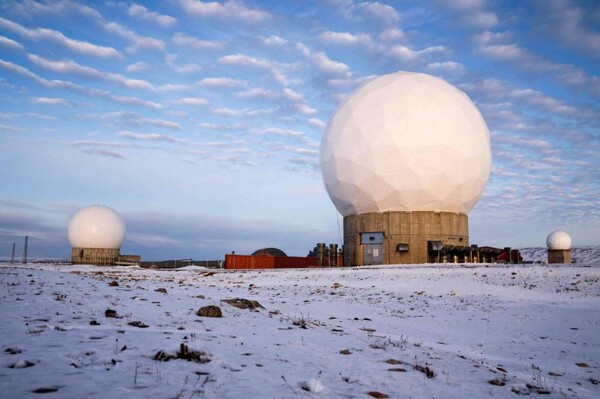
Greenland is not a remote region but an area of great importance for all of Europe. It is an overseas region of the European Union with special rights. In this context, the American base in Greenland could be expanded cooperatively for the benefit of Atlantic security. EU countries must realize that a strategy not linked to close military cooperation is ineffective. President Donald Trump is right about one thing: Denmark alone cannot guarantee Greenland's security. This strategy, while convenient, is fraught with risks, pointing to a strategic vacuum and calling for the creation of facts on the ground. This could include sending additional European troops to Nuuk to support existing infrastructure, reinforcing it with air and naval defense. These capabilities would not only send a political signal but would also be objectively necessary to secure Greenland against a variety of threats as the Arctic region becomes an area of increasing dispute. France, Germany, and the Scandinavian countries share a common assessment of Greenland's importance. Thanks to their rapid deployment capabilities, EU countries have a suitable military tool at their disposal, and its use would not be an act of provocation but a sign of strategic maturity and European unity. European leaders must develop a strategy in close cooperation with the government in Nuuk. The people of Greenland are citizens of the Kingdom of Denmark and therefore citizens of the EU, enjoying the right to free movement. Although the German government was initially hesitant, the major European countries have finally issued a joint statement in support of Greenland. However, the joint assessment of Greenland's importance and the moral support for Denmark do not yet constitute a common strategy for securing Greenland. Whoever controls Greenland influences a key area of European security policy. So how should Europeans respond to the US provocation and the threat of invasion? The first option is to wait and watch, hoping that US institutions and the constitution will curb foreign policy adventures. However, a greater European military presence would significantly increase the political and military costs for the United States. By acting decisively, Europe will also change the internal political calculations in the US, thus defining a new transatlantic relationship. Security can only be achieved through organized European cooperation, and the necessary tools have existed for a long time. Expressions of solidarity must be translated into a joint military strategy. Since US troops are already present in Greenland (at Pituffik), it would in principle be easy for the United States to isolate the legitimately elected government in Nuuk and exploit the island's natural resources as it sees fit. There is a second, bolder option for Europe: secret and substantial cooperation with Denmark and the government of Greenland. Showing European strength could lead to greater cooperation with the United States in Greenland. The island has great strategic value: militarily as a key region in the Arctic, economically due to its raw materials, and geopolitically in the context of new sea routes opened by climate change. These high costs would likely prevent US political checks and balances from taking such a 'foolish' step. A European show of force could also lead to serious negotiations with the United States. As Alexander Stubb said: 'No one decides for Greenland and Denmark but Greenland and Denmark themselves.' Of course, the United States could annex Greenland, despite the presence of Danish and European troops. French President Emmanuel Macron visited Nuuk in June 2025 and reaffirmed his 'steadfast support' for the island's territorial integrity. Finnish President Alexander Stubb took a similar stance. During the Cold War, there were nearly 10,000 American soldiers in Greenland based on the 1951 Defense Agreement, which still binds the United States and Denmark to defend Greenland.